This session explores how educational technology support units (instructional designers, learning technologists, and e-learning centers) can guide and scaffold faculty in the ethical, pedagogical, and technical integration of generative AI tools (e.g., GPTs) for online assessment.

Standard Moodle is a powerful learning platform, but the moment an enterprise needs multi-tenancy, delegated administration, or compliance-scoped reporting across business units, the standard distribution runs out of road — and the decision tree gets complicated fast. This session walks through potential Moodle-based options for organizations facing that inflection point. Touching on options such as Open LMS’s WORK product, Moodle Workplace's commercially supported tenant architecture, IOMAD's open-source company-layer approach, and MuTMS’s plugin-and-patch approach.
We will compare each option across the dimensions that actually drive enterprise decisions: tenant isolation and data privacy, per-tenant branding and theming, delegated admin capabilities, hosting flexibility, licensing models, upgrade path complexity, and the availability of commercial support. Rather than advocating for a single solution, the session presents a framework grounded in real-world deployment experience, helping attendees map their organizational requirements — number of tenants, compliance obligations, internal technical capacity, and budget constraints — to find the option that fits their needs. 

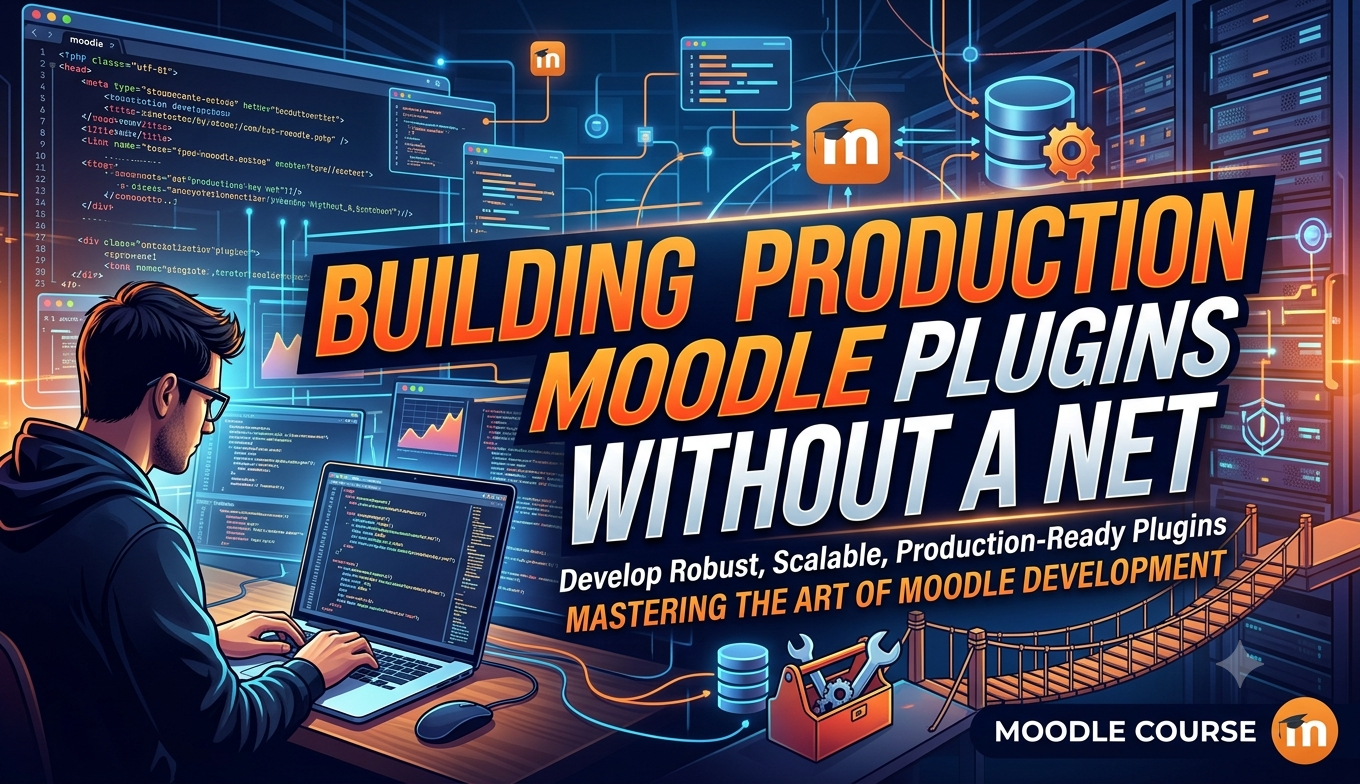
Real-world Moodle plugin development rarely looks like the documentation suggests — especially when you’re building for Moodle Workplace’s multi-tenant architecture, on a managed host without direct server access, for a compliance-critical platform serving people with intellectual and developmental disabilities. This session is a practitioner’s field report from roughly 6 months of iterative plugin development: six plugins built or in-progress, all running in production, none built with the luxury of a dev environment that mirrors production. The focus is on the constraints that forced interesting solutions — tenant-scoped capability patterns, the $USER-by-reference session bug, opcache deployment traps, PHP namespace gotchas — and the spec-first discipline that kept rework manageable. Attendees with Moodle development experience will leave with concrete patterns they can apply; those newer to plugin development will leave with an honest picture of what production Moodle development actually involves.
Experience all that the Library has to offer in this interactive hands on session where you will use the technology in creative ways while seeing all of the creative options that our Comm program is using to engage students both inside and outside the classroom.
Accessibility

Background Colour Background Colour

Font Face Font Face

Font Kerning Font Kerning

Font Size Font Size

1

Image Visibility Image Visibility

Letter Spacing Letter Spacing

0

Line Height Line Height

1.2

Link Highlight Link Highlight

Text Colour Text Colour